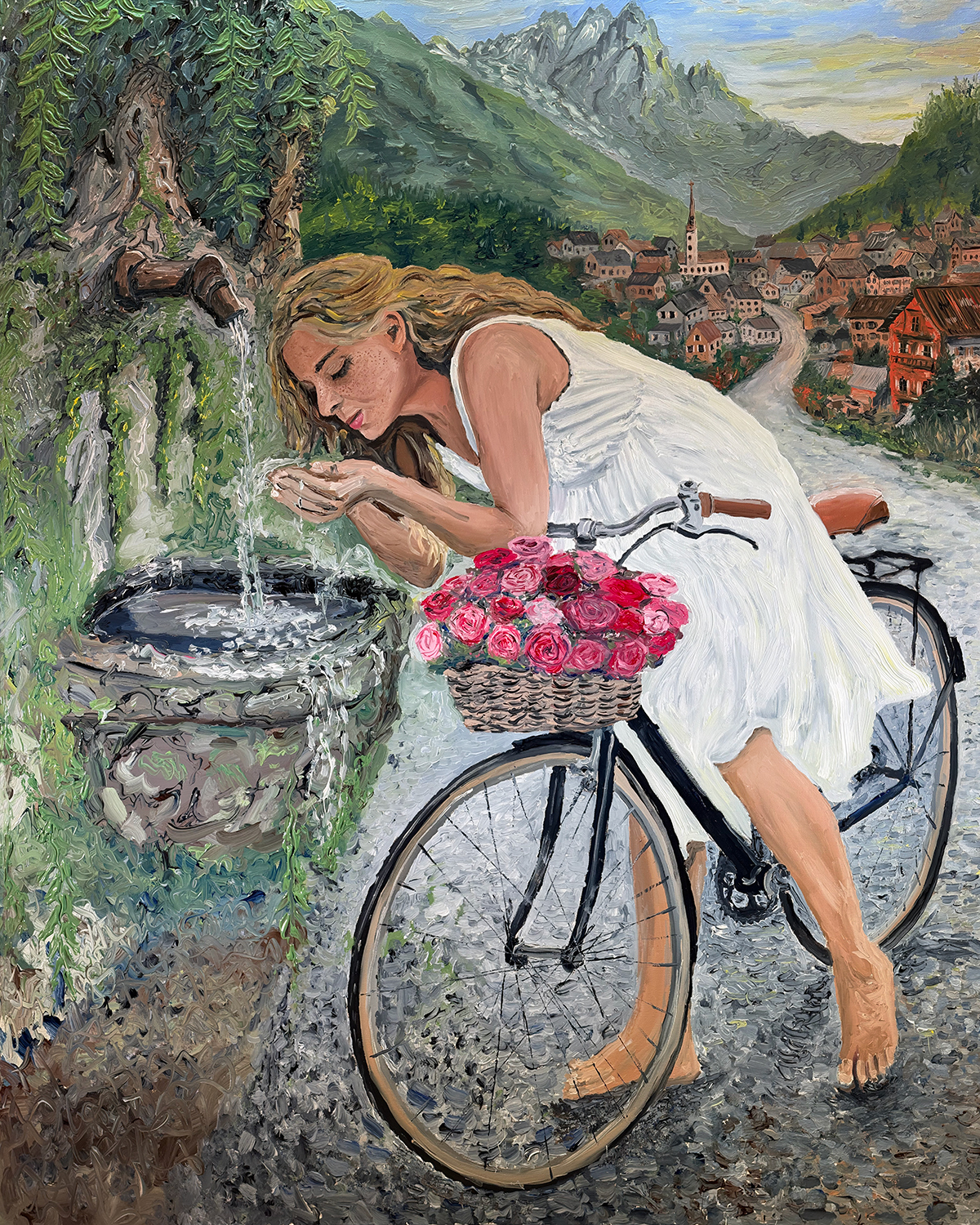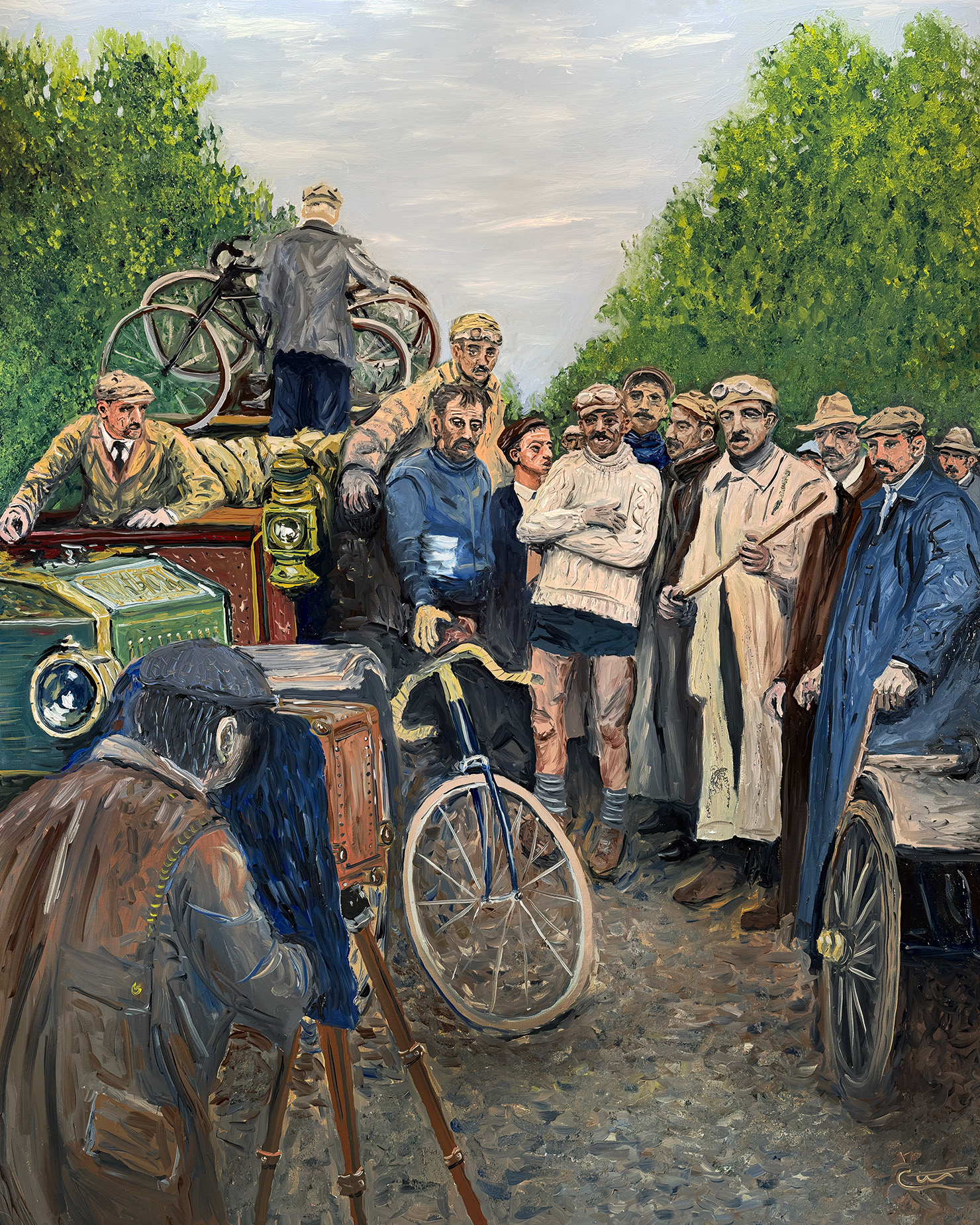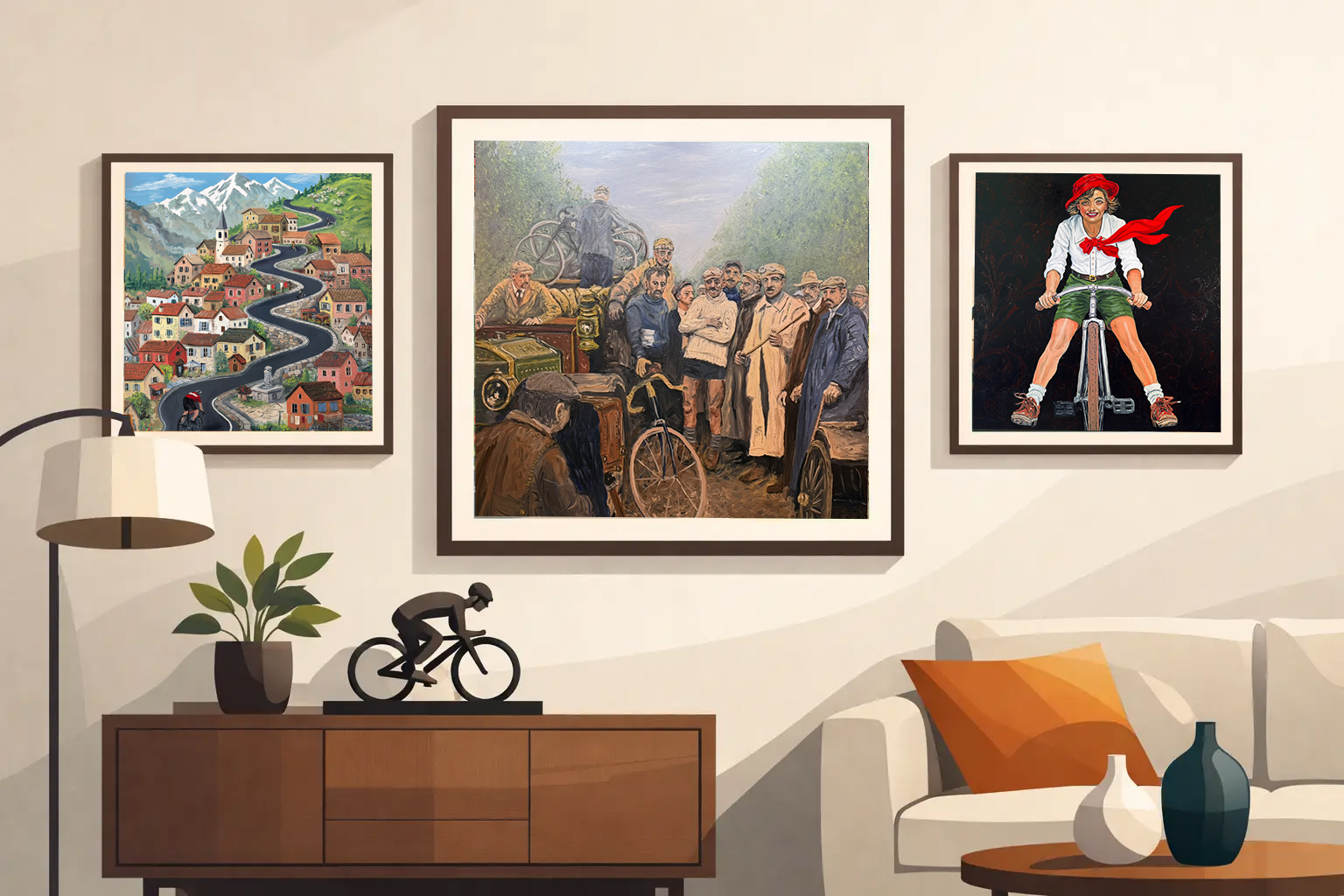
A bicycle leaning against a weathered café wall, a lone rider cresting a quiet road, the hard glint of a steel frame in afternoon light - these scenes carry more than sport. They hold memory, ritual, and the particular pleasure of setting out under one’s own power. Cycling art gives those experiences a permanent place in the home, not as branded decoration or racing memorabilia, but as visual culture with a lived connection to the road.
For collectors, the appeal is often immediate. A painting of cycling can recall a formative ride, a favorite pass, an era of racing, or the mechanical elegance that first made the bicycle feel like more than transportation. Yet the strongest work does not require a viewer to know the difference between a tubular tire and a clincher. It must also stand as art: composed with restraint, alive to light, place, color, and atmosphere.
Cycling Art Preserves a World, Not Just a Subject
The bicycle has always offered artists unusually rich material. Its silhouette is spare and recognizable, but never static. Two wheels, a narrow frame, and a rider bent toward the horizon can suggest speed before the scene has even begun to move. A road disappearing through farmland can make space for anticipation, solitude, or exertion.
This is why cycling art has a cultural weight beyond its subject matter. It records a world of hand-painted frames, wool jerseys, roadside cafés, mountain weather, and long distances measured in effort rather than convenience. The golden age of cycling remains especially compelling because it carries a visual language of its own: modest machines, tactile materials, and races that seemed deeply tied to the regions through which they passed.
A fine painting need not turn that history into nostalgia for nostalgia’s sake. Its purpose is not to freeze the past behind glass. Rather, it can reveal what remains familiar: the sound of tires on rough pavement, the concentration before a climb, the brief companionship of riders sharing the road. These are enduring sensations, even when the bicycles and kits have changed.
Why the Bicycle Works So Well on a Wall
Some subjects announce themselves too loudly in an interior. Others fade into the room. The bicycle occupies a more interesting middle ground. It is graphic enough to give a painting structure, yet graceful enough to leave room for landscape, architecture, and mood.
In an original oil painting, the material character of the medium deepens that balance. Brushwork can make a rain-darkened road feel almost physical. Layered paint can catch the warm red of a jersey or the chalky texture of an old stucco wall. The work becomes about the atmosphere surrounding the rider as much as the rider himself.
That distinction matters when choosing art for a home. A logo, a race photograph, or a vintage advertisement may speak clearly to an enthusiast, but it can lock a room into a single, obvious note. A considered painting can carry the same affection for cycling while remaining open to the people who live with it. It rewards repeated looking because the visual story extends beyond the recognizable bicycle.
There is also a welcome sense of scale. A small painting of a rider on an expansive road can lend depth to an entryway or study. A larger landscape can anchor a living room without making it feel like a shrine to equipment. The best placement depends on the work’s palette, subject, and the room’s existing character, but cycling imagery is remarkably adaptable when the painting is made with compositional care.
The Difference Between Decorative Cycling Imagery and Fine Art
Not every image of a bicycle asks the same thing of its viewer. Decorative work often relies on easy symbols: a bright bike against a plain wall, a slogan, a familiar racing emblem, or a simplified retro motif. There is nothing inherently wrong with this. It may suit a casual space or a temporary mood.
Fine art asks for more. It begins with the artist’s eye: what has been selected, omitted, softened, or emphasized? Is the cyclist a portrait, a small figure within the land, or an almost abstract gesture of motion? Does the painting possess tension between effort and stillness? Does the color serve the scene rather than merely imitate a period style?
Authorship is central here. Original oil paintings retain evidence of decisions made by hand - altered edges, visible layers, and shifts in light that no flat reproduction fully duplicates. Those qualities give a work a presence in the room. They also make each painting singular, even when it belongs to a larger series devoted to a shared period or landscape.
Museum-quality prints occupy a different, valuable place. They offer access to an artist’s visual world at a more flexible scale and price, often making sense for a first collector, a cycling office, or a gift with genuine permanence. The trade-off is straightforward: a print can carry the image beautifully, while an original carries the particular physical history of its making. Neither choice is merely practical. It depends on the collector’s relationship with the work and the role it will play at home.
Choosing Cycling Art With Staying Power
The most successful choice usually begins with a personal response rather than a checklist. A rider may be drawn to a painting because it recalls the hush of early miles before traffic gathers. Another collector may respond to the architecture of a frame, the restraint of a muted palette, or the story implied by a distant peloton.
Still, a few questions help distinguish a passing attraction from a work worth living with. Consider whether the painting offers something beyond the bicycle itself. Look at the landscape, the treatment of light, and the emotional temperature of the image. Notice whether the period references feel observed and integral, rather than added as costume.
It is also wise to think about the room honestly. A dramatic mountain road may need room to breathe. A smaller work centered on a single rider can bring intimacy to a library, hallway, or office. If the surrounding interior is quiet and neutral, a painting with a strong jersey color or sunlit wall can provide a measured point of energy. In a more layered room, an atmospheric landscape may create calm.
For gifts, specificity has real value. A generic bicycle image says that someone rides. A well-chosen painting can acknowledge the deeper thing: that cycling has shaped how they see place, time, weather, friendship, and themselves. That makes it suitable for a milestone, a retirement, a new home, or the difficult task of honoring a passion without reducing it to novelty.
A Living Record of the Open Road
The most affecting bicycle paintings are rarely about winning. They may contain racing, but they recognize that cycling’s emotional center often exists away from the finish line: on a narrow road with no audience, at the edge of a village, or in the quiet interval after a hard climb. The rider is part of the landscape, and the landscape becomes part of the rider’s story.
That is the lasting promise of cycling art. It gives form to a pursuit that is otherwise made of passing moments - a change in wind, a wheel turning in sun, a familiar route seen differently after years away. Choose a work that keeps asking you to look again, and it will bring the road indoors without ever making the room feel small.