For the better part of the last decade, minimalism won the argument. Bare walls, floating canvases, raw edges left exposed - the framing of artwork was treated as clutter, an unnecessary layer between the viewer and the "purity" of the piece. I understand the instinct. But I think it got the relationship backwards. A painting doesn't lose meaning inside a frame. It gains an anchor, a finishing statement, and a home on the wall it was always meant to hang on. The importance of framing artwork isn't a design trend to revisit — it's a fundamental part of how a painting communicates that it matters.
That belief shapes how I work. Every painting that leaves my studio is framed by hand, because I don't think a piece is finished until it's ready to be lived with.
Framing Artwork Signals That the Work Matters
Think about the last time you walked through a museum or a serious gallery. Almost nothing hangs unframed. That's not tradition for tradition's sake — it's a visual cue. A frame tells the eye "stop here, look closely, this was made with intention." Strip that cue away and even a strong painting can read as unfinished, provisional, or temporary — something still in progress rather than something complete.
Framing paintings properly does two things at once: it protects the physical object, and it communicates the object's importance before a single brushstroke is even considered. How you display your artwork is not a secondary decision made after the "real" work is done. It's part of the statement the piece makes.
Why I Build Custom Stretchers and Custom Frames for Every Painting
I build my own stretchers by hand for every canvas, and I build the frame to match — not off the rack, not from a catalog. That process starts before I've finished painting, because the frame isn't a container I drop the finished piece into. It's part of the same decision-making that goes into the color palette, the composition, and the subject itself.
Custom picture frames matter for oil paintings in particular because the depth of the canvas, the texture of the paint, and the mood of the piece all need a frame profile and finish that supports them rather than fighting them. A frame that's too ornate can overwhelm a quiet, contemplative scene. A frame that's too plain can undersell a piece meant to feel monumental. Matching the frame to the artwork is a craft decision, not an afterthought — and it's one I take as seriously as the painting itself.
Pulling the Painting Into the Frame Itself
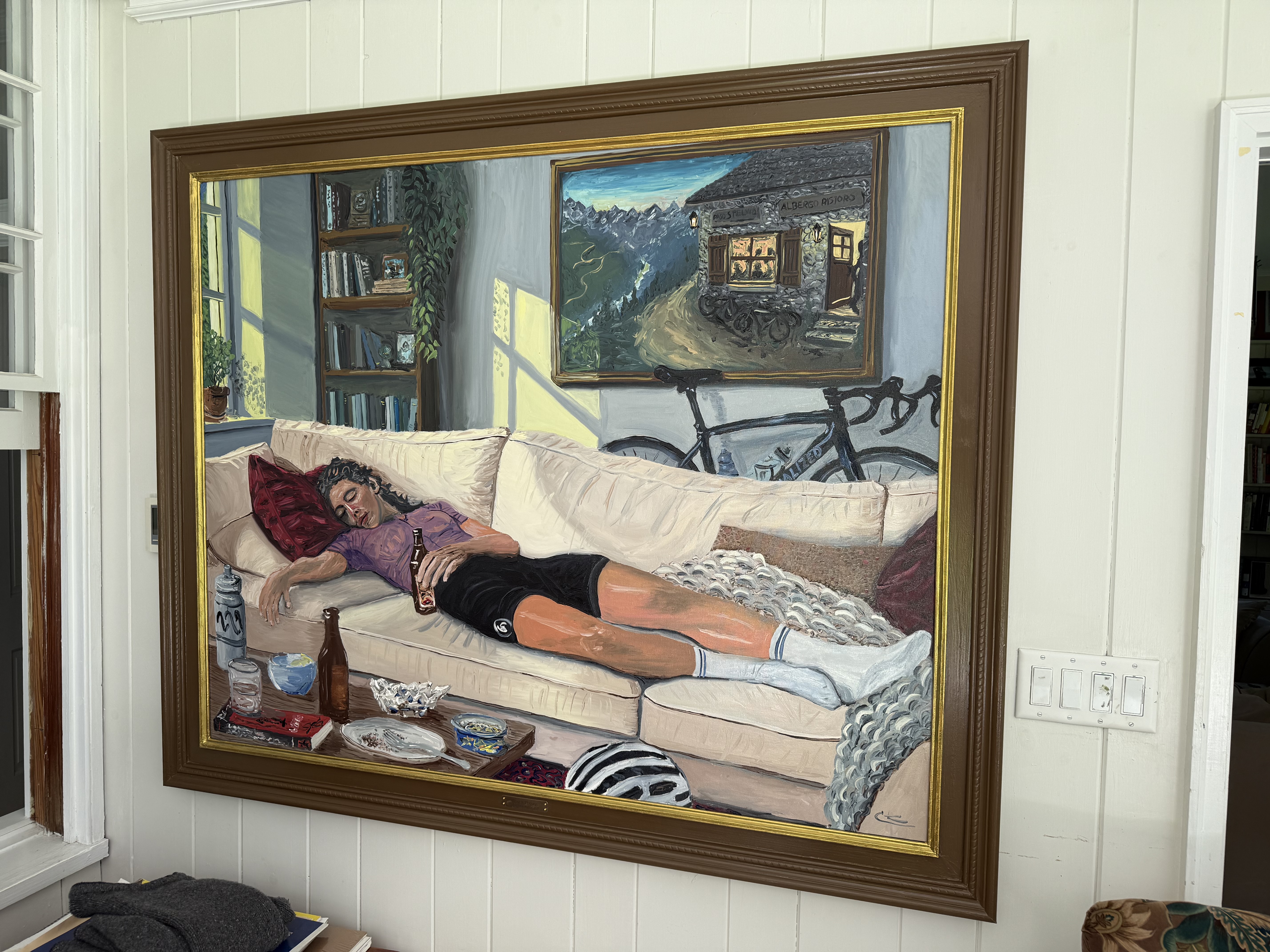
In my most recent work, I've pushed this further: I'm pulling elements directly out of the painting and carrying them into the frame's design — a color, a motif, a line that continues past the edge of the canvas and into the wood itself. The frame stops being a boundary around the piece and becomes a true component of the artwork.
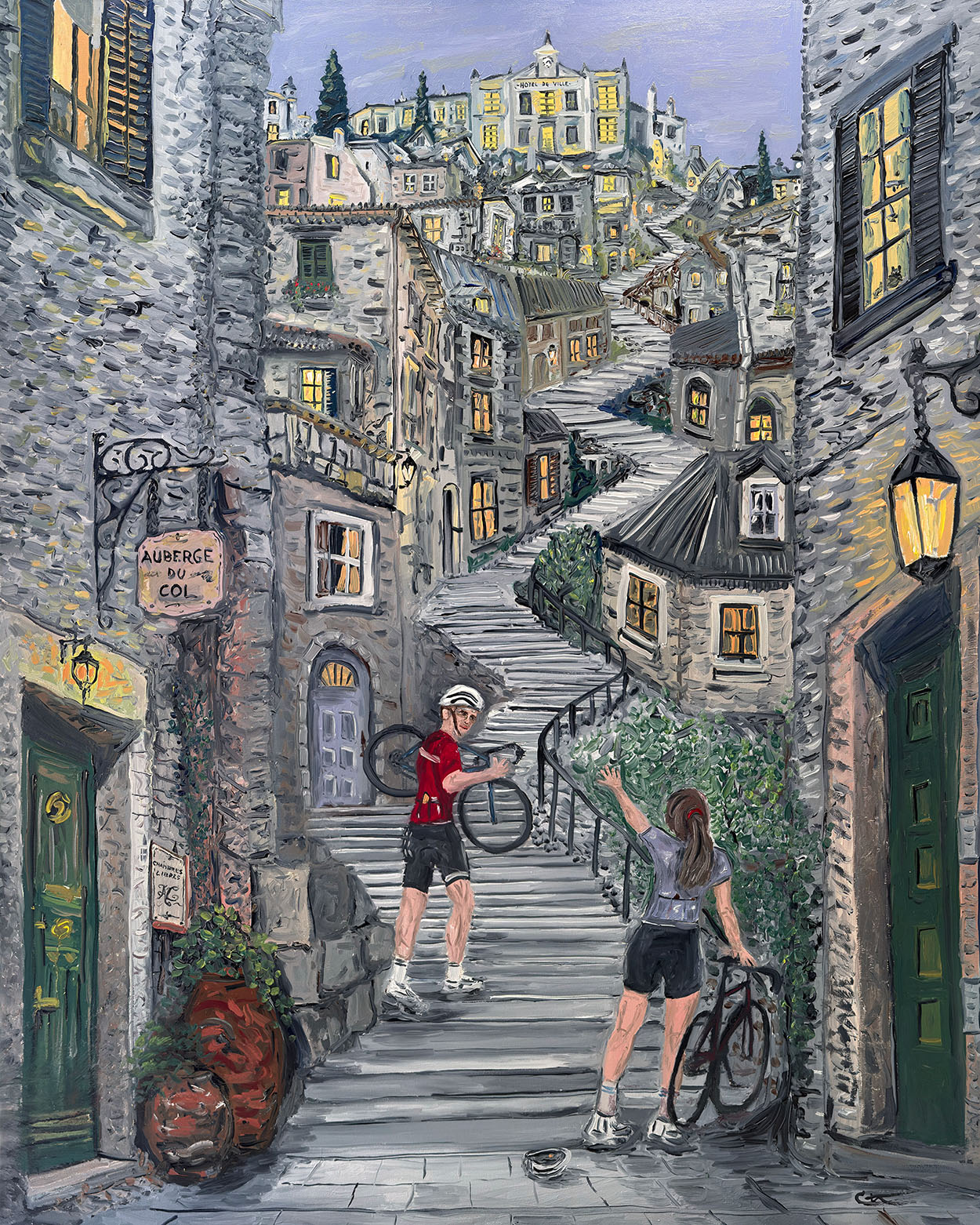
You can see this approach in Hotel de Ville, one of the newest paintings in the studio. The frame isn't a neutral edge here — it extends the story of the piece rather than simply containing it. It's a small shift in practice, but it changes how the whole object reads on a wall. The painting and the frame stop being two separate decisions and start being one finished work.
Presentation Is Part of the Artwork You Choose to Live With
I'd argue that how you display your artwork is just as important as the artwork you choose to display in the first place. A painting you love, hung without consideration for how it's framed and anchored to the wall, will always feel slightly unresolved. The right frame doesn't compete with the painting for attention — it disappears into supporting it, the way a good sentence disappears into supporting an idea.
This is part of why pieces from the studio — like the ones featured in The Telescope and Girl on a Bridge — are built and framed as a single object from the start. It's also why, when a piece is reproduced as a print through the print collection, I encourage collectors to think about framing early rather than as a last step before hanging it.
The Frame Is the Last Brushstroke
Minimalism will keep cycling in and out of fashion, and bare canvases will keep having their moment. But I keep coming back to the same conclusion: framing artwork well is not decoration layered on top of a painting. It's the last brushstroke — the decision that tells a viewer this piece was made with care, was finished with care, and deserves to be lived with rather than just looked at.
If you'd like to see more of this approach in person — or talk through framing options for a piece you're considering — you can browse the full gallery, read more in the journal, or get in touch directly.